Wire mesh fence installation — safe for horses and livestock of all kinds
The safest barrier for horses and livestock — installed by specialists.
Wire mesh fencing is one of the safest fencing options available for horses and a wide range of livestock — the right mesh type eliminates hoof and leg entanglement, keeps animals contained without sharp edges, and when combined with a hardwood or Flex topline, gives excellent visibility. System Equine installs all major wire mesh types across Ontario for horses, cattle, sheep, goats, alpacas, llamas, deer, bison, and multi-species operations.
Wire Mesh Types We Install
Not all wire mesh is the same. Choose the right system for your animals.
We install wire mesh fencing using a variety of mesh styles depending on the application, horse type, and overall property needs. Post spacing typically ranges from 12′ to 18′ centres depending on the type of mesh being installed, allowing us to balance strength, appearance, and overall fence performance.
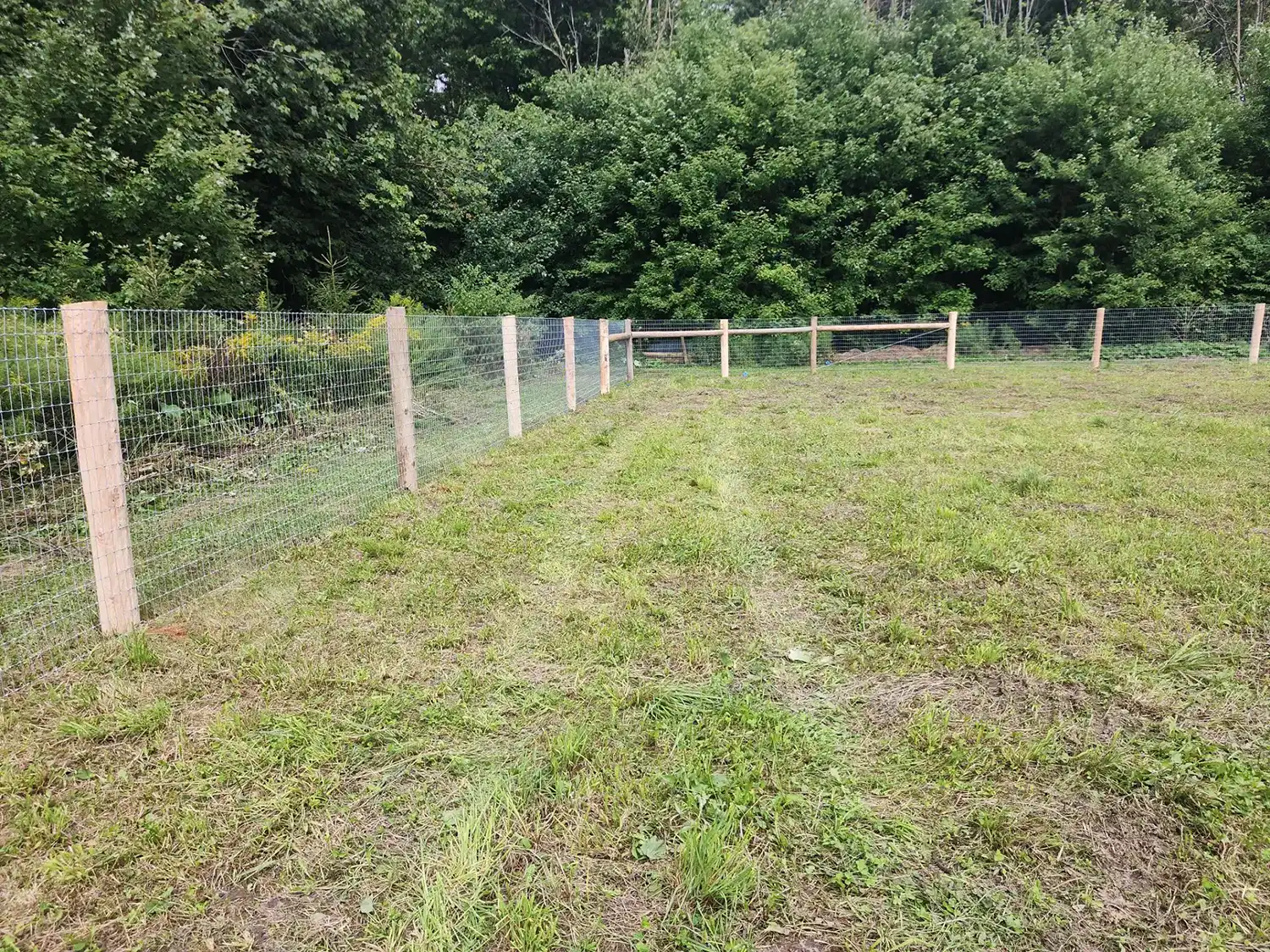
No-Climb Horse Fence
- Tightly woven 2″×4″ or similar mesh — hooves and legs cannot pass through
- No sharp cut wire ends on field side — eliminates laceration risk
- High-visibility when combined with hardwood or Flex topline
- Prevents horses from reaching through to adjacent paddocks
- Most recommended wire mesh type for horse properties
Best for: Horse paddocks, shared fence lines, breeding farms, young horse facilities
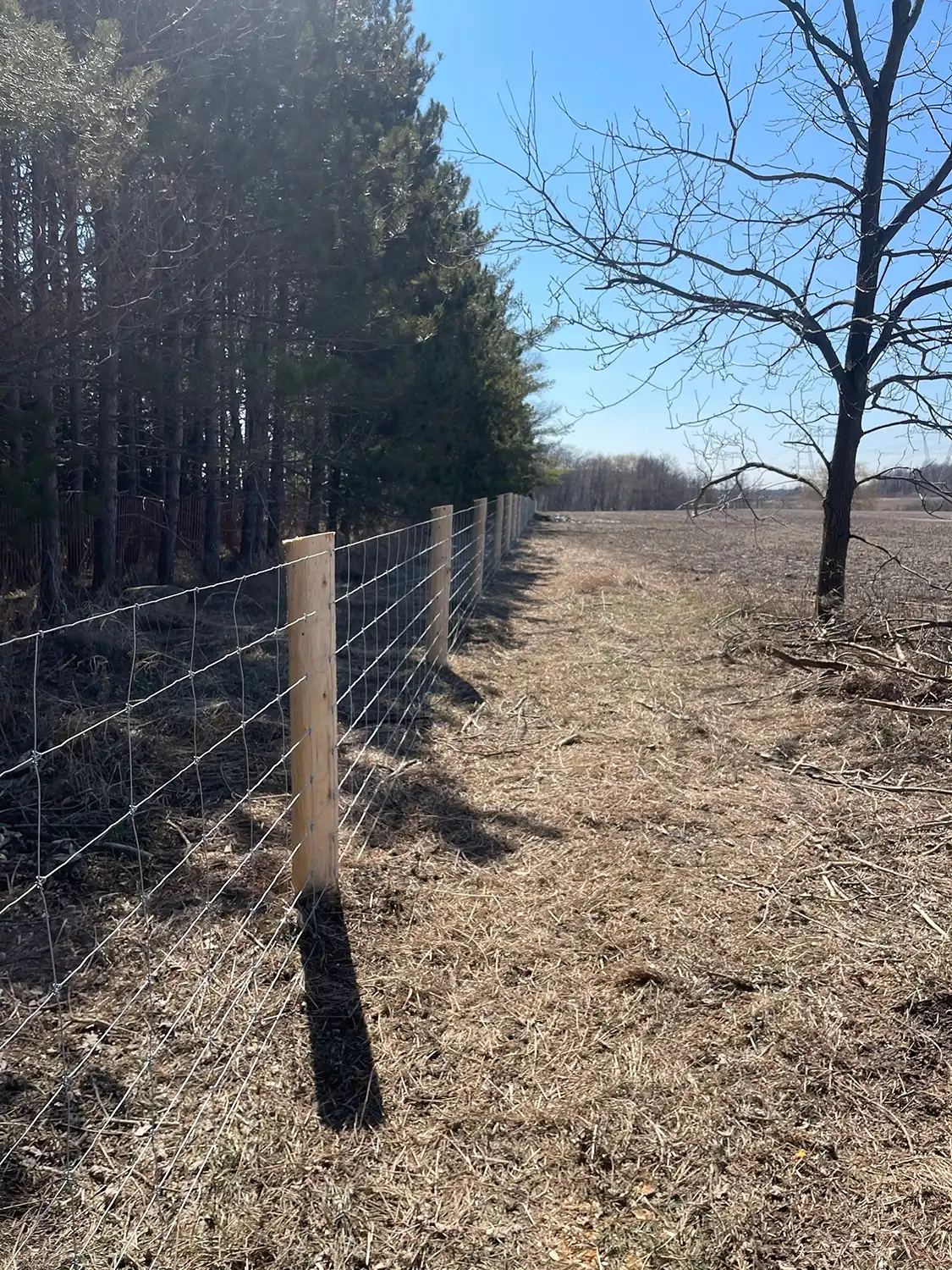
Fixed-Knot Woven Wire
- Fixed knot at every intersection — does not shift or loosen under pressure
- Significantly stronger than hinge-joint woven wire
- Available in multiple heights and mesh configurations
- Excellent for horses, cattle, sheep, goats, alpacas, and llamas
- Commonly used with a hardwood or Flex topline for visibility
- Not recommended for horses, openings are too big
Best for: All livestock species, perimeter containment
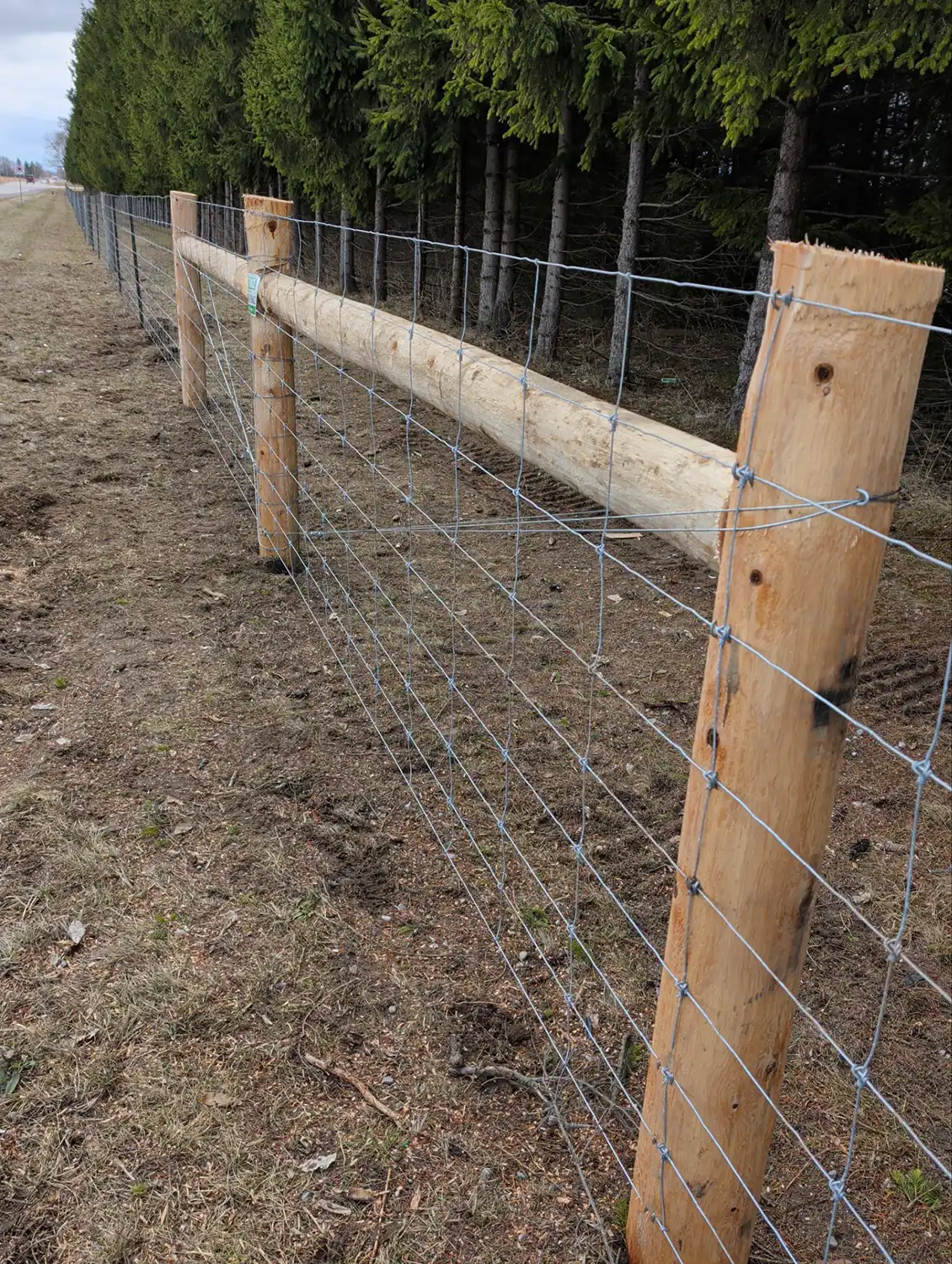
Paige Wire Farm Fence
- Rectangular grid pattern in multiple mesh sizes
- Cost-effective for large-area multi-species fencing
- Available in graduated spacing — smaller openings at bottom for small animals
- Pairs well with electric top strand for pasture management
- Widely used across Ontario mixed livestock farms
Best for: Mixed livestock farms, sheep, goats, pigs, general farm use
High Tensile Wire
- Single or multi-strand high-tensile steel wire
- Most economical option per linear foot for large perimeters
- Can be electrified for additional containment
- Requires correct tensioning equipment and experience — not DIY-friendly
- Suitable for cattle, horses in large pastures, perimeter fencing
Best for: Cattle perimeters, farm boundary fencing
TOPLINE COMBINATIONS
Improve visibility with a hardwood or Flex topline.
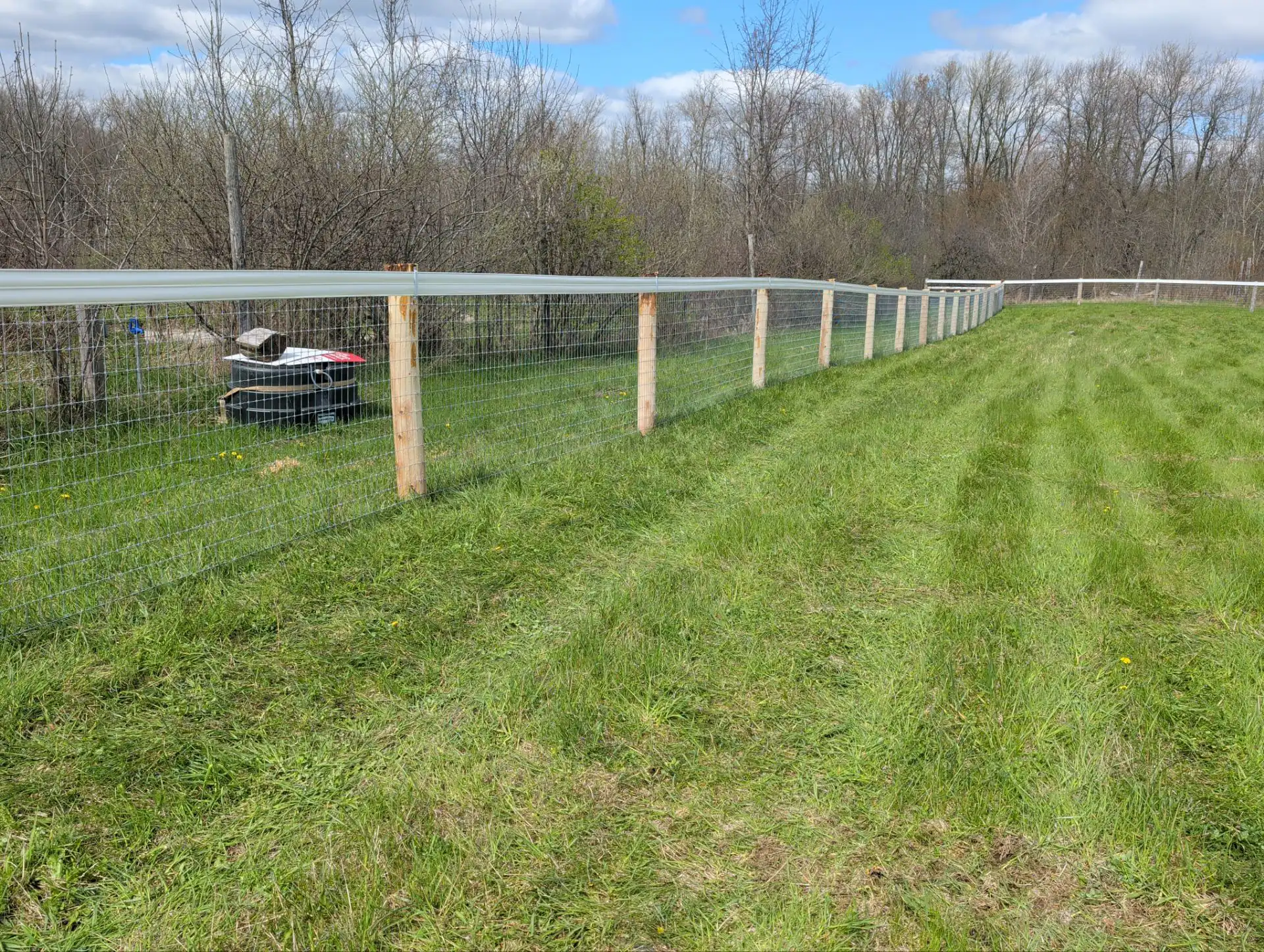
Wire mesh on its own has limited visibility for horses. We routinely combine wire mesh with a hardwood board, Flex Fence rail, or electric tape topline to give the fence a clear visual line that horses respect. This is standard practice on most horse properties using wire mesh.
TOPLINE COMBINATIONS
Wire mesh fencing for every species on your property.
Horses
No-climb horse fence is the recommended choice — eliminates hoof and leg entanglement risk. Always pair with a hardwood, Flex, or electric topline for visibility.
Cattle
Paige Wire with a top rail of Barb or Electric High tensile would be the recommended fence.
Sheep & Goats
Sheep and goats require small mesh openings to prevent them from getting their heads caught and to stop predator intrusion. Fixed-knot in a sheep/goat mesh configuration and graduated Paige wire fence are the preferred options. Predator exclusion is a key consideration in mesh selection.
Alpacas & Llamas
Alpacas and llamas require wire mesh with small openings to prevent leg entanglement and to exclude coyotes and other predators. Fixed-knot mesh in an appropriate configuration is our recommendation for these species.
Deer & Elk
Deer and elk require tall, strong fencing — minimum 8 feet for deer, taller for elk. Woven wire or fixed-knot in a deer fence configuration with appropriate height is required.
Bison
Bison require heavy-gauge, high-strength wire with robust post sizing and spacing. We assess bison fencing requirements on a project-specific basis.
Common questions
Wire mesh installation — common questions
No-climb fence uses a specific small mesh pattern — typically 2″×4″ — designed so that a horse hoof or leg cannot pass through the opening and become trapped. Fixed-knot refers to how the horizontal and vertical wires are joined — a fixed (mechanically locked) knot that does not shift or loosen under pressure. Many fixed-knot fence products are also no-climb. Your System Equine specialist will recommend the right product for your specific animals and containment needs.
Yes — almost always. Wire mesh on its own has very limited visibility for horses, especially at speed. A hardwood board topline, a Flex Fence rail, shockline or an electric tape strand at the top of the wire gives the fence a clear visual line that horses see and respect. We include this recommendation in every horse property wire mesh quote.
Sheep and goats require a small mesh opening to prevent head entanglement and predator intrusion. Fixed-knot wire in a sheep/goat configuration — typically with openings no larger than 4″×4″ — or graduated Square Deal fence are our standard recommendations. Predator exclusion is as important as containment for these species.
Yes. Any wire mesh fence can be paired with one or more electric strands — above the mesh as a hot top rail, or at the bottom to discourage rooting or pushing. For cattle and horse properties, an electric top strand is a common and effective add-on to wire mesh installations.
High tensile wire is a single or multi-strand wire with significantly higher breaking strength than standard wire. It spans longer distances between posts and is the most economical option per linear foot for large perimeter fencing. It requires professional installation and correct tensioning equipment — it is not appropriate as a DIY project. It is commonly used for cattle perimeters and large horse pastures.
Ready to get started
Request a wire mesh fence installation quote
Tell us what animals you are fencing for and we’ll recommend the right mesh type, topline, and configuration for each zone. We draw it on screen and give you a clear cost estimate on the first call.